Reed Bamboo-Style Plant Support Set — A Natural-Look Framework for Guiding Tender Stems & Keeping Small Pots Orderly
Reed Bamboo-Style Plant Support Set — A Natural-Look Framework for Guiding Tender Stems & Keeping Small Pots Orderly
Couldn't load pickup availability


Reed: guide the growth, keep the plant in view 🎋
Add modest support while leaving the plant itself in view.
Good plant support begins with looking at the way a stem wants to grow. Notice whether it is simply leaning toward the light, carrying new foliage or reaching beyond the edge of the pot. A stake is not always the first answer; changing the position or reviewing the growing conditions may matter too. When support is appropriate, keep the arrangement light enough that the plant remains the focus rather than the framework around it.

Find the stem that actually needs help 🌱
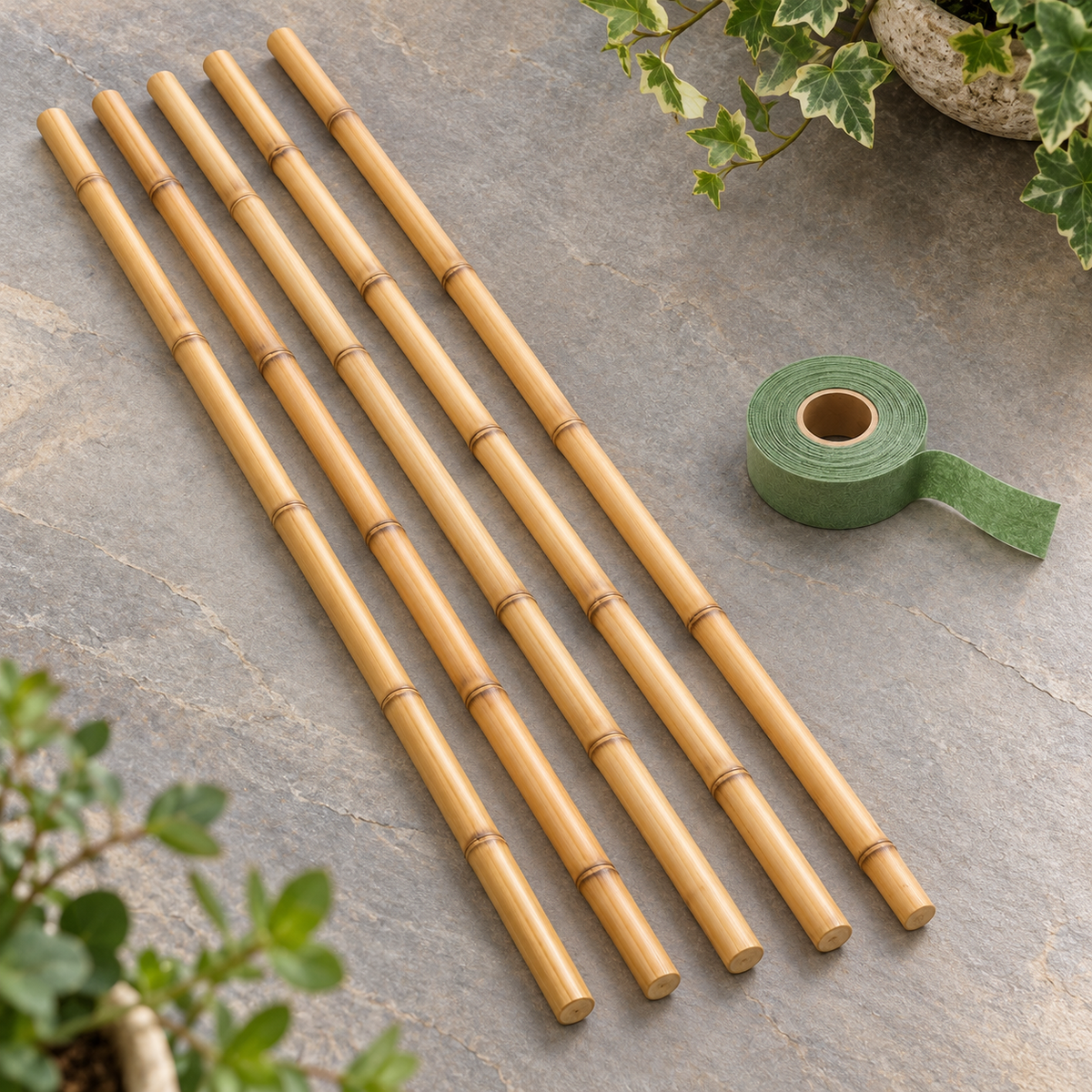
Reed uses familiar straight bamboo stakes rather than an elaborate cage. Five matching pieces allow a small group of pots to share the same understated treatment. The soft green tie roll is intended to blend into foliage while making it easy to adjust how a stem is supported. This is a simple starting point for gentle guidance, not a structural solution for heavy climbing crops or exposed garden conditions.
Choose a position that gives the stem a nearby guide without forcing it into an abrupt new angle. Consider the roots before inserting anything into the pot, particularly if the planting is already well established. Work gently and stop if there is resistance. A support placed thoughtfully at the beginning is easier to live with than one pushed into a crowded root area simply to make the plant look straighter for the moment.

Straight lines and gentle connections 🧵
A simple straight profile can suit a range of small potted plants without a large frame.
The straight-stake design lets you decide where the visible lines should sit. One can follow a main stem, while another can be reserved for a separate plant rather than automatically added to the same pot. Keep the upper ends away from busy routes and places where someone may lean over the planting. The most useful arrangement is easy to see, easy to reach and easy to adjust without dismantling the entire display.
Tie loosely, then return to check
Position a stake close enough to guide a stem, then attach a loose tie with room for the plant to grow.
Place stakes before roots become crowded where possible, and avoid forcing them through resistance. Fasten ties loosely, leaving space for movement and growth. Revisit the arrangement as stems lengthen; a support that suited a young plant may need repositioning or replacement later.
Bring the tie around the support and stem without pulling the plant tightly against the stake. Leave room for thickening and ordinary movement, and avoid placing a tie across a vulnerable leaf junction. After attaching it, look again from another angle to check that the stem is not sharply bent. Treat the first arrangement as a starting point, not a permanent fastening that can be forgotten until the plant visibly struggles.

Make a supportive arrangement look natural
Natural-looking stakes blend well with clay pots, pale containers and leafy green surroundings. Keep unused pieces together so the next support does not have to be improvised from an unrelated object. If several pots share a shelf, a repeated simple shape can bring order without making every plant look identical. Allow the foliage to vary; the supports are there to help the collection grow, not to impose a rigid decorative pattern.

Adapt as the growing season moves on
Check the ties during ordinary watering rounds and adjust them before they become tight. As the plant grows, the useful attachment point may move or another support method may become more suitable. Remove arrangements that are no longer needed rather than leaving them hidden inside the leaves. Keep spare tie material accessible and store the stakes where their ends will not catch clothing, scratch nearby objects or become lost behind larger garden tools.