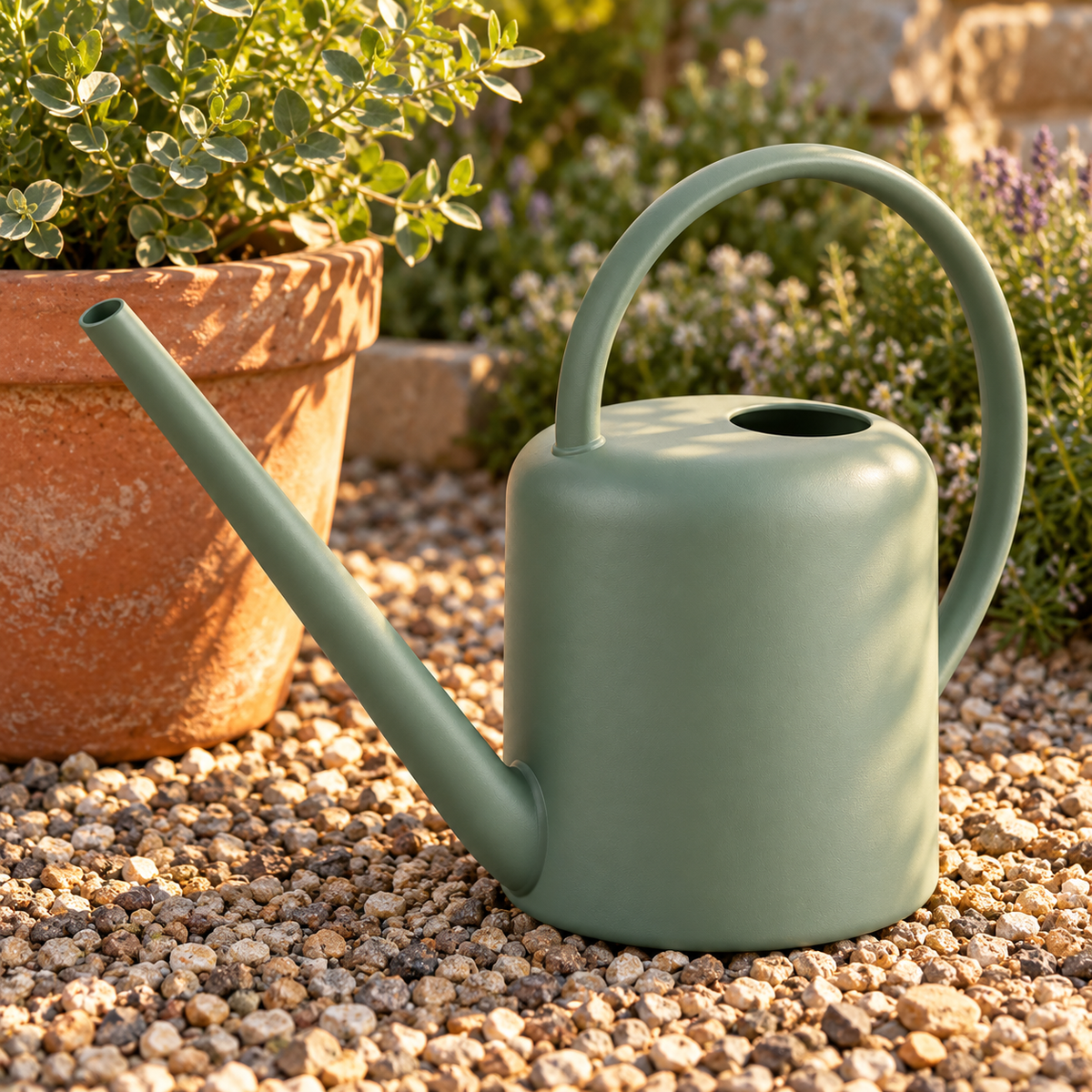
Meadow Narrow-Spout Watering Can — A Eucalyptus-Green Companion for Considered Pot Watering & Sheltered Garden Routines
Meadow Narrow-Spout Watering Can — A Eucalyptus-Green Companion for Considered Pot Watering & Sheltered Garden Routines
Couldn't load pickup availability


Meadow: take the long way around the plants 🚿
Bring an unhurried watering routine to pots and small planters.
A watering round is an opportunity to notice what has changed since the last visit. A new leaf, a pot that feels lighter or a saucer that still holds water can all influence what you do next. Meadow is intended to accompany that slower observation. Its simple form keeps the emphasis on moving from plant to plant, making a deliberate decision rather than giving every pot the same automatic pour.

A narrow spout with a clear purpose 🌦️
A slender spout is helpful when you want to aim toward an exposed area of soil rather than wetting everything nearby. Bring the tip into a comfortable position without pushing through delicate foliage. Keep the body supported and leave room to change the pouring angle gradually. If the route to the soil is awkward, reposition the pot instead of stretching across other plants or relying on a long uncontrolled stream.

Read the soil before reaching for the handle 🌿
Meadow takes the familiar watering-can shape in a compact, restrained direction. A long narrow spout and rounded body are paired with a broad overhead handle, keeping the design focused on carrying and pouring rather than attachments. The eucalyptus finish is meant to feel at home beside both indoor foliage and sheltered patio plants. There are no interchangeable heads or hidden mechanisms in the proposed design.
Check the growing conditions and the individual plant before filling the can for a full round. A shaded pot may behave differently from one beside a bright window, and a recent move can change the routine again. Keep plant-care advice close if the collection includes unfamiliar varieties. The watering can delivers the water; the useful judgment still comes from understanding the roots, potting mix and environment around each plant.
Make room for the watering route
Clear the route between the filling point and the plants, especially if the space includes rugs, cables or narrow gaps beside furniture. Fill only as much as is comfortable to carry and use a separate trip when needed. A little preparation reduces the temptation to balance the can awkwardly or set it on an unstable edge while making room for a pot at the last moment.

Pour, pause and move to the next pot
Direct a controlled pour toward the soil, pausing between plants instead of flooding the surface in one pass.
Fill only to a level you can carry comfortably. Bring the spout close to the soil and pause when water begins to drain from the pot. Different plants and potting mixes need different amounts, so judge the task by the planting rather than by an assumed schedule or the capacity of the can.
Begin gently and allow the surface to accept the water. If it runs away immediately or pools unexpectedly, stop and assess the planting rather than simply pouring more. Let drainage occur in an appropriate place and deal with collected water before returning the pot to a sensitive surface. Working in stages gives you a chance to respond to what the plant and container are actually doing.

A quiet green accent between visits
The muted eucalyptus finish pairs easily with pale stone, warm clay and deeper foliage. Give the empty can a stable resting place near the care area rather than leaving it in a walkway. With the spout visible and the surrounding arrangement uncluttered, it can remain an attractive part of the scene between tasks. Practical placement matters more than staging a perfect corner that is difficult to reach.
Keep a small cloth near the filling point so stray drops can be wiped away before carrying the can indoors.