Fern Foldaway Potting Mat — An Olive-Green Workspace for Tabletop Repotting, Small-Space Gardening & Easy Reset Routines
Fern Foldaway Potting Mat — An Olive-Green Workspace for Tabletop Repotting, Small-Space Gardening & Easy Reset Routines
Couldn't load pickup availability


Fern: unfold a temporary garden workspace 🍀
Turn a small patch of table into a temporary planting station.
Not every home has a permanent potting bench. A folding work surface can make gardening feel possible in the spaces already available, provided the table beneath it is protected appropriately. Open Fern only when needed and keep the surrounding area free for the finished plants. The appeal is a temporary place for soil and small tools, rather than a dedicated fixture that has to occupy the room between sessions.

Fold away the work, not the care
When the surface is clear, remove grit gently and wipe as appropriate. Let every fold dry before closing the mat, particularly around the corners where moisture or fragments may remain. Fold without trapping sharp tools inside, and choose a storage place that does not press heavy objects against the snaps. Keeping the mat on its own makes it quicker to retrieve and inspect at the next repotting session.

Prepare the table before the plant 📐
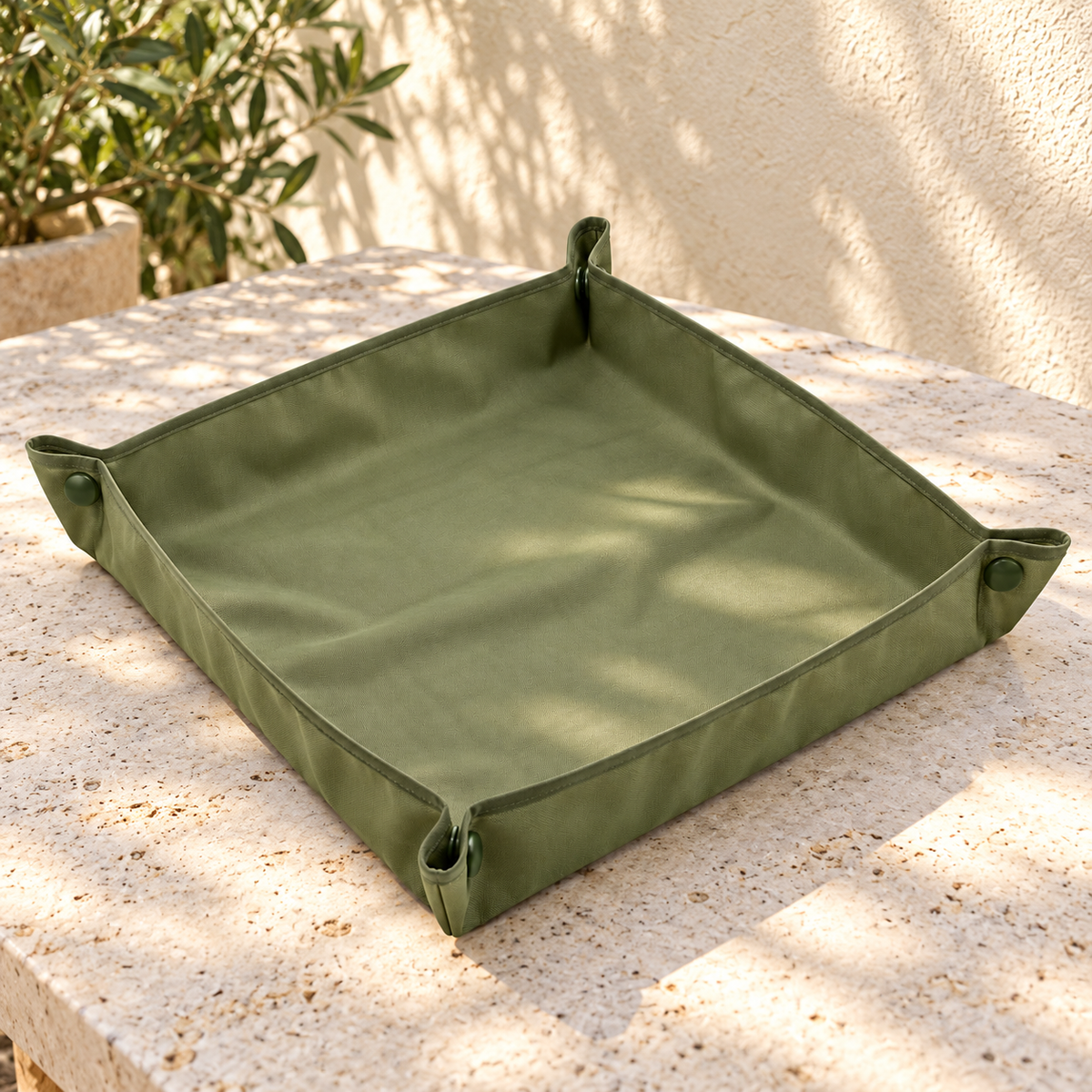
Fern is intended for homes where gardening shares space with other activities. Open the mat for a short repotting session, then fold it away when the table needs to return to everyday use. The four snap corners create a shallow working area without a rigid frame. Dusty olive gives the practical surface a natural feel, while the uncomplicated square shape is easy to understand at a glance.
Choose a stable surface and clear away food, papers and objects that should stay clean. Check beneath the mat for grit before putting any weight on it. If you are working indoors, have a separate container ready for discarded leaves and old soil. It is easier to keep those materials apart from fresh mix when the decision is made before the first plant is lifted out of its pot.
A clean sequence for a messy afternoon
Fasten the corners before setting down a pot, then gather dry debris after the planting task is complete.
Clear the table first and use additional protection if the finish is delicate. Gather debris toward the center before releasing the corners. The mat is a surface organizer, not a verified waterproof basin; avoid allowing water to pool and inspect the snaps and folds before each use.
Work through one plant before bringing the next into the center. Put the finished planting onto a clean saucer or another protected resting place. Gather loose roots and damaged leaves separately, then decide what remaining material can be reused. Moving through those steps in order prevents the mat from becoming an unsorted mixture of fresh supplies, used soil and accessories that still need to be put away.

Four corners give the task a boundary 🌼
Fasten the corners before adding loose material, then smooth the center so pots can sit steadily. The edges are a visual and practical boundary for ordinary potting debris, not a reason to pile the area high. Keep enough space inside to turn the pot and move a hand tool without catching the folded sides. A little spare room makes the work calmer and the cleanup less awkward.

Bring olive tones into the everyday
The dusty olive palette sits naturally beside warm wood, cream ceramics and a few terracotta accents. Because the mat is a working surface, styling can stay minimal: a pot, the current tool and a little open space are enough. When it is folded away, the table returns to daily life. That flexibility makes the gardening ritual feel like part of the home rather than a separate room it lacks. Keep the folded mat beside your planting supplies so the entire setup is easy to bring out together.